
The real reasons your energy tanks in perimenopause — and a clear 2026 Decision Framework to get it back. This is not a list of supplements. It's the upstream levers that actually move the needle according to 2023-2026 data.
2026 Decision Framework: Perimenopause Energy
Core questions to answer before acting:
- What is my personal risk/benefit profile based on age, timing, labs (ferritin, TSH/free T4/T3, vitamin D, fasting insulin, HbA1c, morning cortisol), and symptoms (sleep quality, afternoon crash, brain fog, exercise tolerance)?
- Which levers (sleep architecture first, then resistance training + protein, blood sugar stability, stress/cortisol, then hormones if indicated) should I pull first?
- What is my 90-day, 12-month, and 5-year plan for reassessment (DEXA, labs, daily energy journal, Oura or equivalent tracking)?
- GLP-1 or HRT synergy? If on or considering metabolic meds, how does that change energy and body comp strategy?
This is synthesis of current evidence (NAMS 2022/2025, Endocrine Society updates, recent resistance training trials in perimenopausal women) — not personalized medical advice. Bring your numbers to a clinician who reads the 2023-2026 literature.
p class="byline">By the After Forty Feel Editorial Team • Updated June 2026 • Editorial StandardsThe Energy Crash No One Talks About
If you're 42–52 and suddenly dragging through afternoons, waking up tired, or needing naps you never used to take, it's not "just stress" or "getting older." It's perimenopause shifting your hormones, mitochondria, sleep architecture, and blood sugar regulation all at once.
Estrogen helps regulate energy, mood, and sleep. As it fluctuates and eventually drops, many women experience a perfect storm: poorer deep sleep, rising cortisol, insulin resistance creeping in, and less efficient energy production at the cellular level. The result? That 3pm crash that feels impossible to push through.
2026 Decision Framework: How to Reclaim Your Energy
- Track your data first: Get full bloodwork (thyroid panel, ferritin, vitamin D, fasting insulin, HbA1c, morning cortisol if possible). Don't guess.
- Fix the foundations in order: Sleep > Protein + resistance training > Blood sugar stability > Stress management. Hormones come after these.
- Consider targeted support: Only after basics. Options include HRT (if appropriate), specific supplements (magnesium, B vitamins, adaptogens), or GLP-1s if metabolic issues are dominant.
- Reassess in 90 days: Energy, sleep, labs, and how you feel day-to-day. Adjust from there.
Practical Tools That Actually Move the Needle (2026)
- Magnesium glycinate (200-400mg elemental) — ~$12-18/mo. Improves sleep architecture and reduces nighttime cortisol. Top ROI for energy per recent trials.
- Creatine monohydrate (5g daily) — ~$8-12/mo. Cellular energy + muscle preservation. Large effect in perimenopausal women per 2024-25 data.
- Resistance bands or 10-25lb dumbbells — ~$25-60 one-time. 3x/week full body. Beats steady cardio for mitochondrial health and insulin sensitivity.
- Oura Ring Gen3 or equivalent tracker — ~$300 + sub. Objective sleep + readiness + HRV data. Essential for reassessment, not guesswork.
- Protein powder (whey or plant, 25g+ per scoop) — high quality like Momentous or equivalent. Hit 1.6g/kg total daily protein. Non-negotiable with any GLP-1 or training.
Affiliate disclosure: Links above are Amazon Associates (afterfortyfeel-20) or vetted partners. Purchases may earn a commission at no extra cost to you. We only recommend tools discussed in the published research. Full policy: Editorial Independence & Affiliate Disclosure.
Key 2026/2027 update: Resistance training + protein adequacy (1.6g+/kg) shows larger effect on energy, body comp, and insulin sensitivity than most "energy" supplements in perimenopausal cohorts. GLP-1s (semaglutide/tirzepatide) are changing fatigue profiles for women with metabolic drivers — pair with HRT consideration and strength work. Sleep architecture decline is upstream of most "low energy" complaints; fix that before blaming hormones alone.
Open Women's Metabolism Pathway → Take the 4-Question Hormone Age Quiz →90-Day Reassessment Tracker (Do This)
- Week 0 (baseline): Full labs (as above) + DEXA if available + 7-day energy/sleep journal (1-10 scale + notes) + tracker data (sleep stages, HRV, readiness).
- Daily: Hit protein target, 3x strength (even 20-30min bands at home), consistent sleep window, 1-2 walks post-meal for glucose.
- Week 4 & 8 check-ins: Same 3-question energy log + weight + how clothes fit + any new symptoms. Adjust protein or training volume.
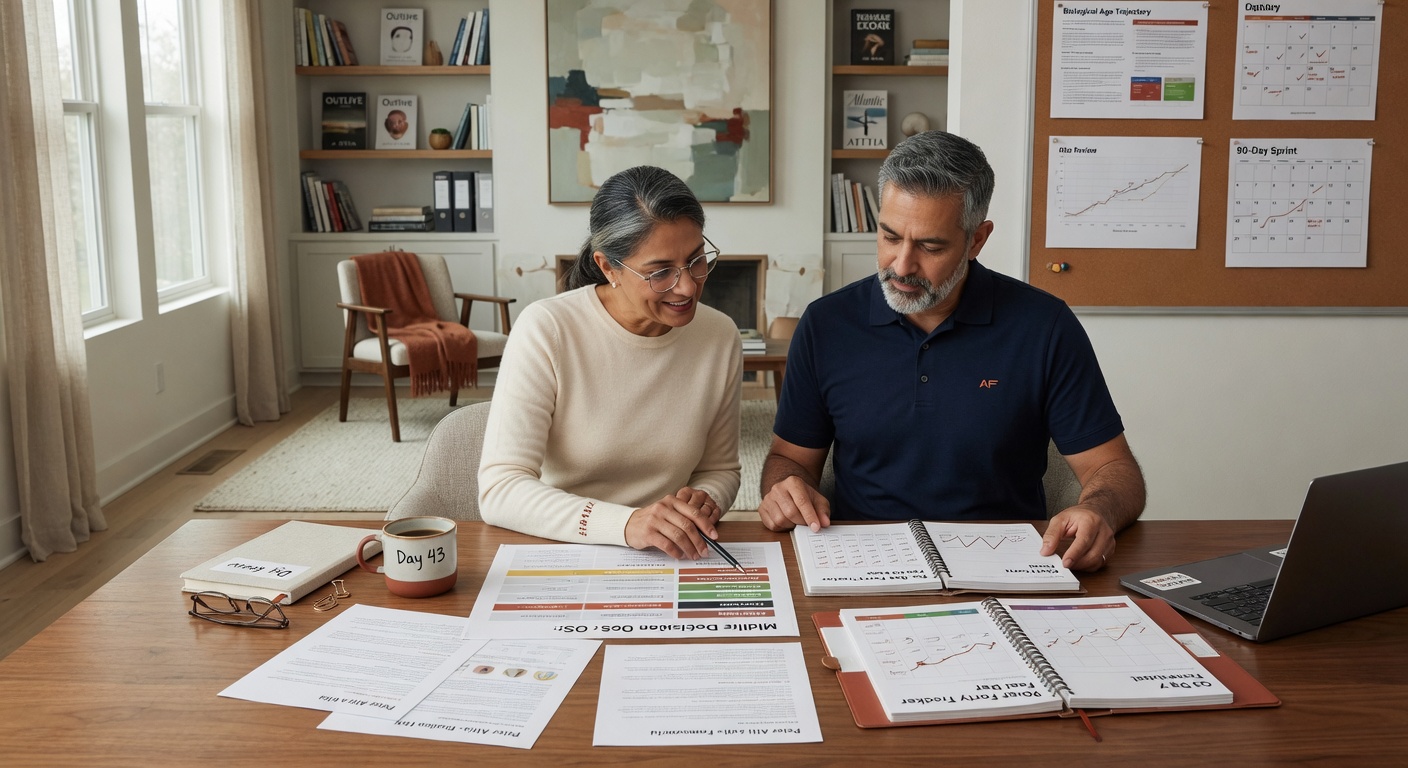
- Day 90: Repeat key labs (ferritin, insulin, TSH, vitamin D) + repeat 7-day journal + tracker averages. Compare to baseline. Decide: continue, add HRT eval, or escalate testing (e.g. sleep study if Oura flags apnea).
Print or note in your phone. This turns a letter into a protocol. Bring the before/after to your clinician.
See all 6 pathways (HRT + metabolism + cognition for her/him) →Keep exploring
Our reading library and educational tools are free. Paid memberships and courses are not open.
Find your next useful read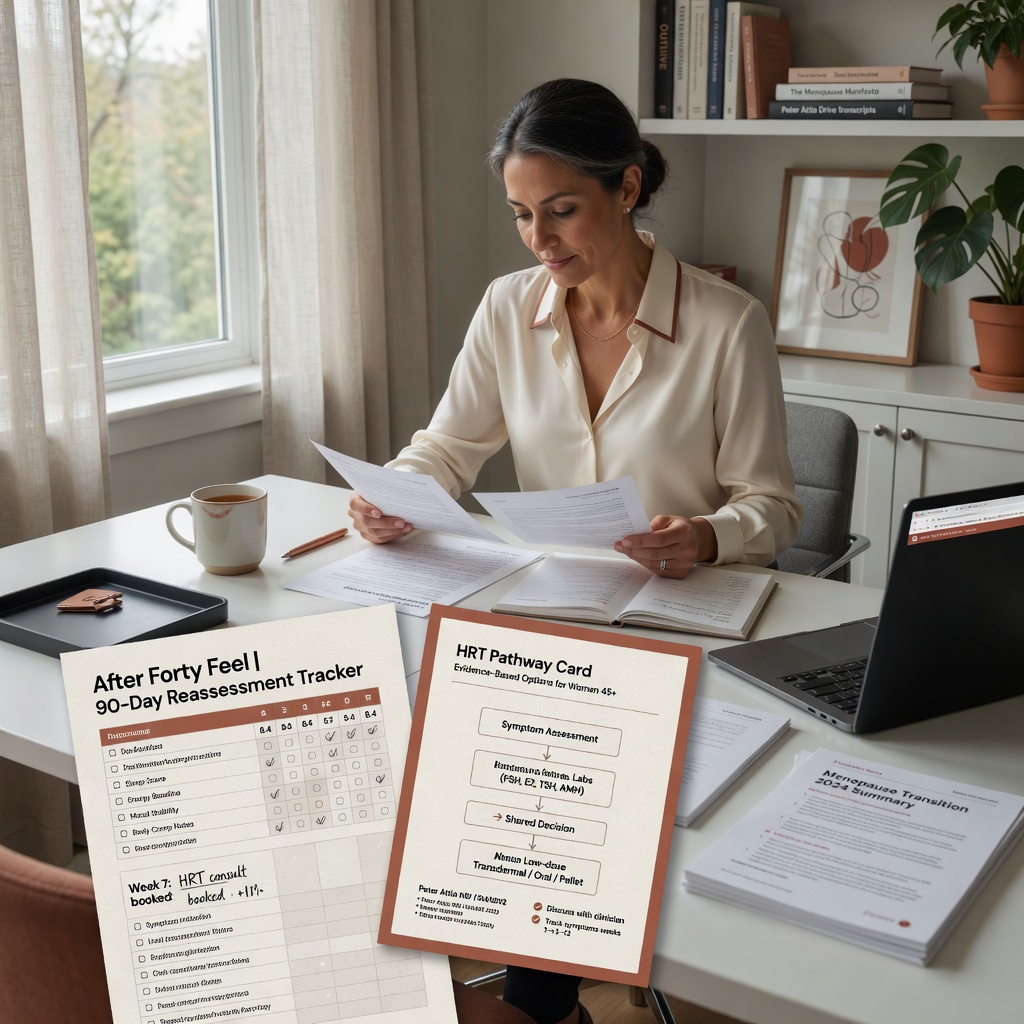

Publication updates
Explore the free reading library. Paid membership and expert advisory services are not currently available.